Skip to product information
1 of 6

Redwood Stainless Systems

Craft Beer Centrifuge

Craft Beer Centrifuge

  • Ultra-low dissolved oxygen pickup below 5 ppb under recommended operating conditions
  • High-efficiency removal of yeast, cold break, protein particles, and suspended solids
  • Low-shear beer handling designed to protect aroma, foam stability, and flavor
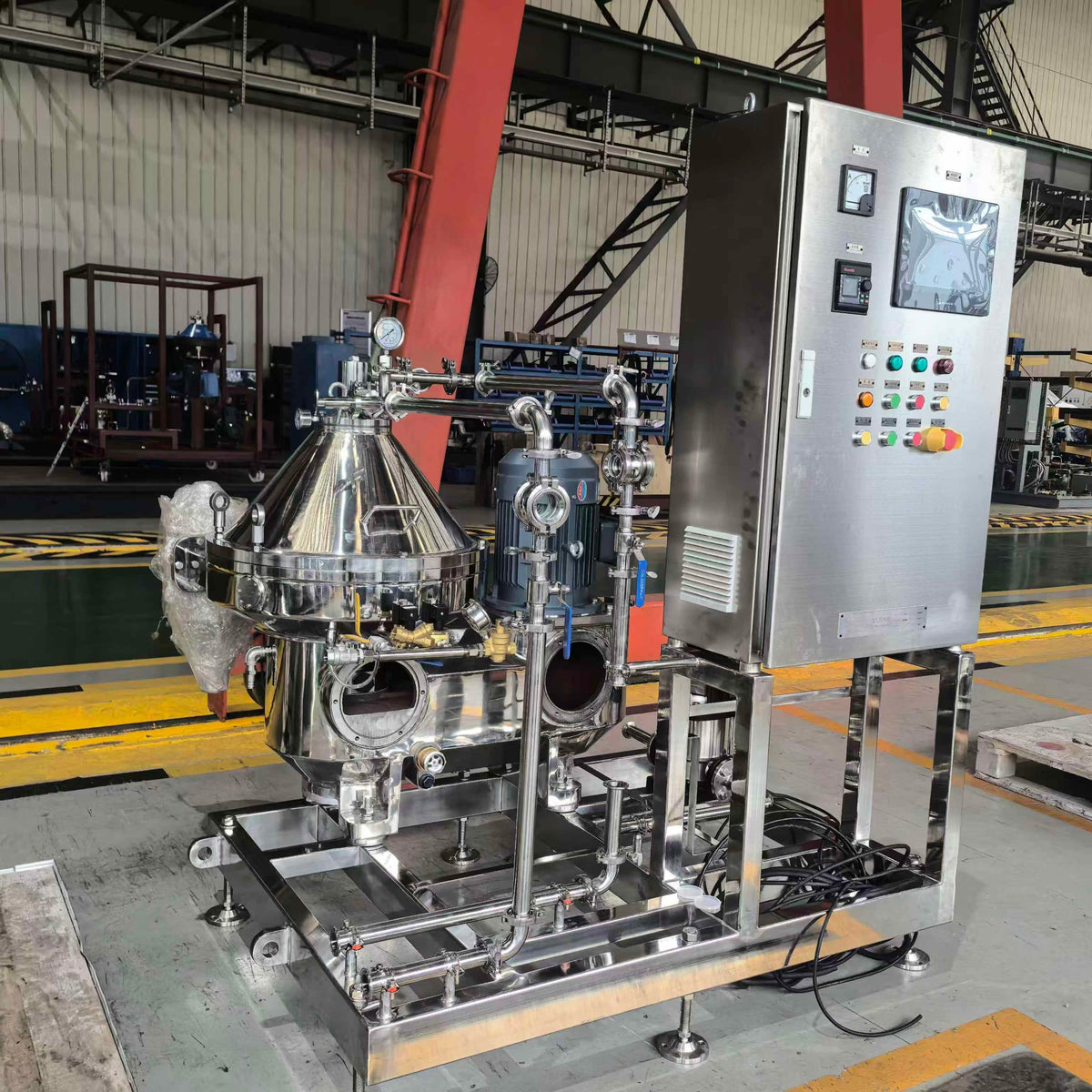
  • Fully automatic PLC operation with automatic sludge discharge and CIP
  • Multiple capacities available from 2–15 tons/hour
View full details

Faster Clarification. Lower Oxygen Pickup. Better Beer Quality.

Every brewery wants brighter beer, shorter production cycles, and longer shelf life. But as production grows, clarification can become a bottleneck.

Traditional gravity settling keeps valuable fermentation tanks occupied while beer waits to clarify, increasing production time and potentially increasing beer losses.

The Redwood Craft Beer Centrifuge is a fully automatic disc stack separator designed to quickly remove yeast, cold break, protein particles, and suspended solids while helping protect the fresh aroma, flavor, and foam stability of the beer.

Using low-shear feeding technology, CO₂ inert gas protection, deoxygenated sealing water, and a pressurized sealing structure, the system minimizes oxygen exposure throughout clarification. Under recommended operating conditions, dissolved oxygen pickup can be maintained below 5 ppb.

By shortening clarification time and recovering more saleable beer from yeast sediment, a centrifuge can help breweries increase fermenter utilization, reduce product loss, and improve overall production efficiency without immediately adding more cellar tanks.

Available capacities range from 2 to 15 tons/hour, supporting growing craft breweries, regional breweries, contract breweries, and larger commercial operations.

Q1. What is a beer centrifuge?

A beer centrifuge is a high-speed disc stack separator that uses centrifugal force to remove yeast and suspended solids from finished beer. Compared with natural settling, it can significantly shorten clarification time and improve production efficiency.

Q2. When should a brewery consider investing in a centrifuge?

A centrifuge may be worth considering when fermentation tanks remain occupied while beer waits to clarify, production demand is increasing, beer losses from yeast sediment are becoming significant, or consistent beer clarity and low dissolved oxygen are becoming priorities.

Q3. Is a centrifuge suitable for a craft brewery?

Yes. Modern compact beer centrifuges can support breweries at different production scales. Growing breweries may install a centrifuge before expanding cellar capacity because faster clarification can improve fermenter utilization.

Q4. Will a centrifuge affect beer flavor or foam?

The low-shear feeding system is designed to reduce turbulence and help protect hop aroma, foam stability, protein structure, and mouthfeel during clarification.

Q5. How does the centrifuge minimize dissolved oxygen pickup?

The system combines low-shear feeding, CO₂ inert gas protection, deoxygenated sealing water, and a pressurized sealing structure. Under recommended operating conditions, DO pickup can remain below 5 ppb.

Q6. Can a centrifuge replace filtration?

It depends on the brewery process. Some breweries use centrifugation before filtration to reduce filter loading, while others use centrifugation as the primary clarification step for certain beer styles.

Q7. Does the centrifuge include automatic CIP?

Yes. The centrifuge includes an automatic CIP cleaning system. Alkaline detergent and clean water are recommended for routine cleaning.

Q8. What are the normal wear parts?

Mechanical seals are considered normal wear parts. Seal replacement intervals depend largely on water quality and operating conditions.

Q9. Can the centrifuge be customized for different electrical standards?

Yes. Electrical configurations and selected components can be customized for different markets and local requirements.