Skip to product information
1 of 1

Redwood Stainless Systems

304 / 316L Stainless Steel Mixing Tank by Redwood | Sanitary CIP Design for Beverage Production

304 / 316L Stainless Steel Mixing Tank by Redwood | Sanitary CIP Design for Beverage Production

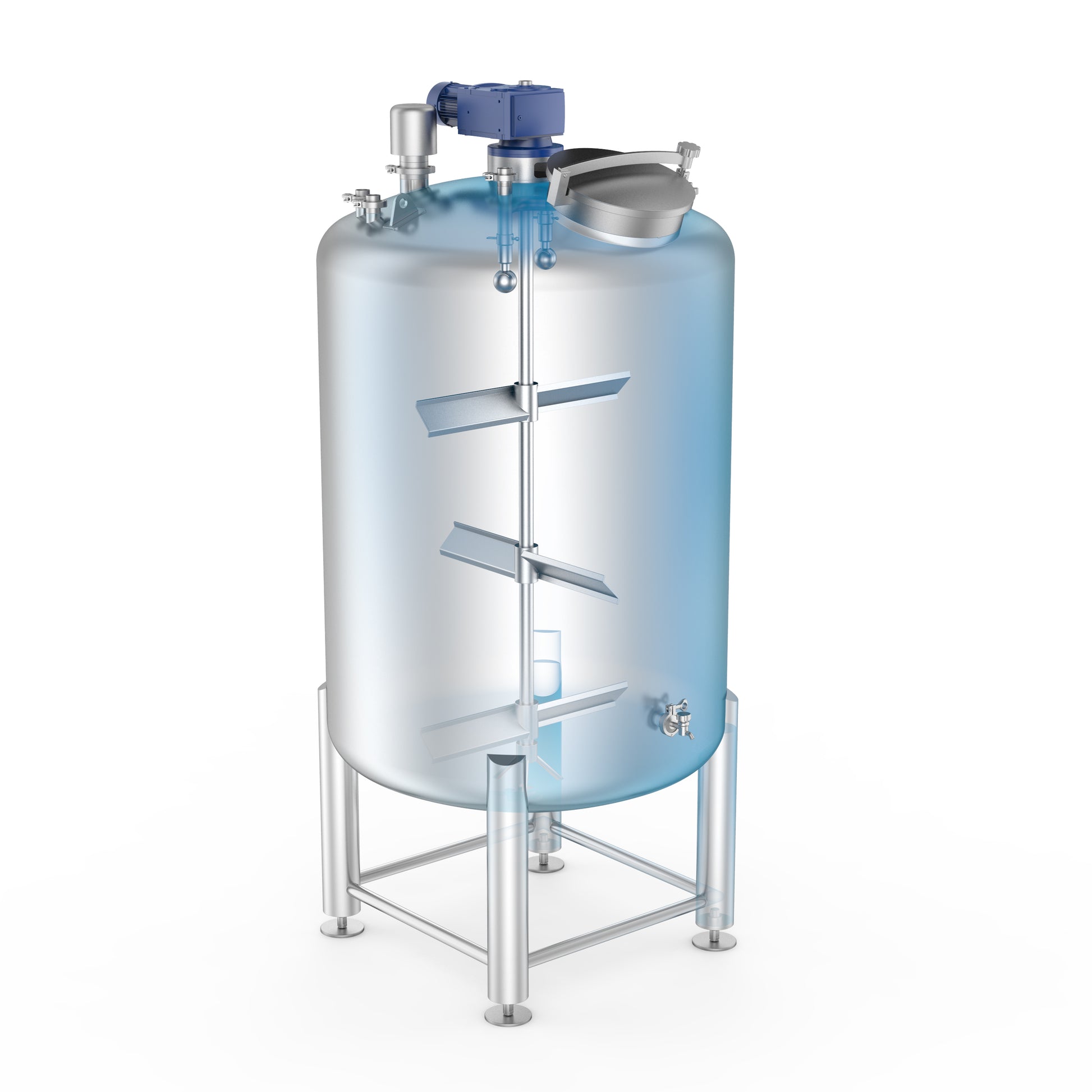
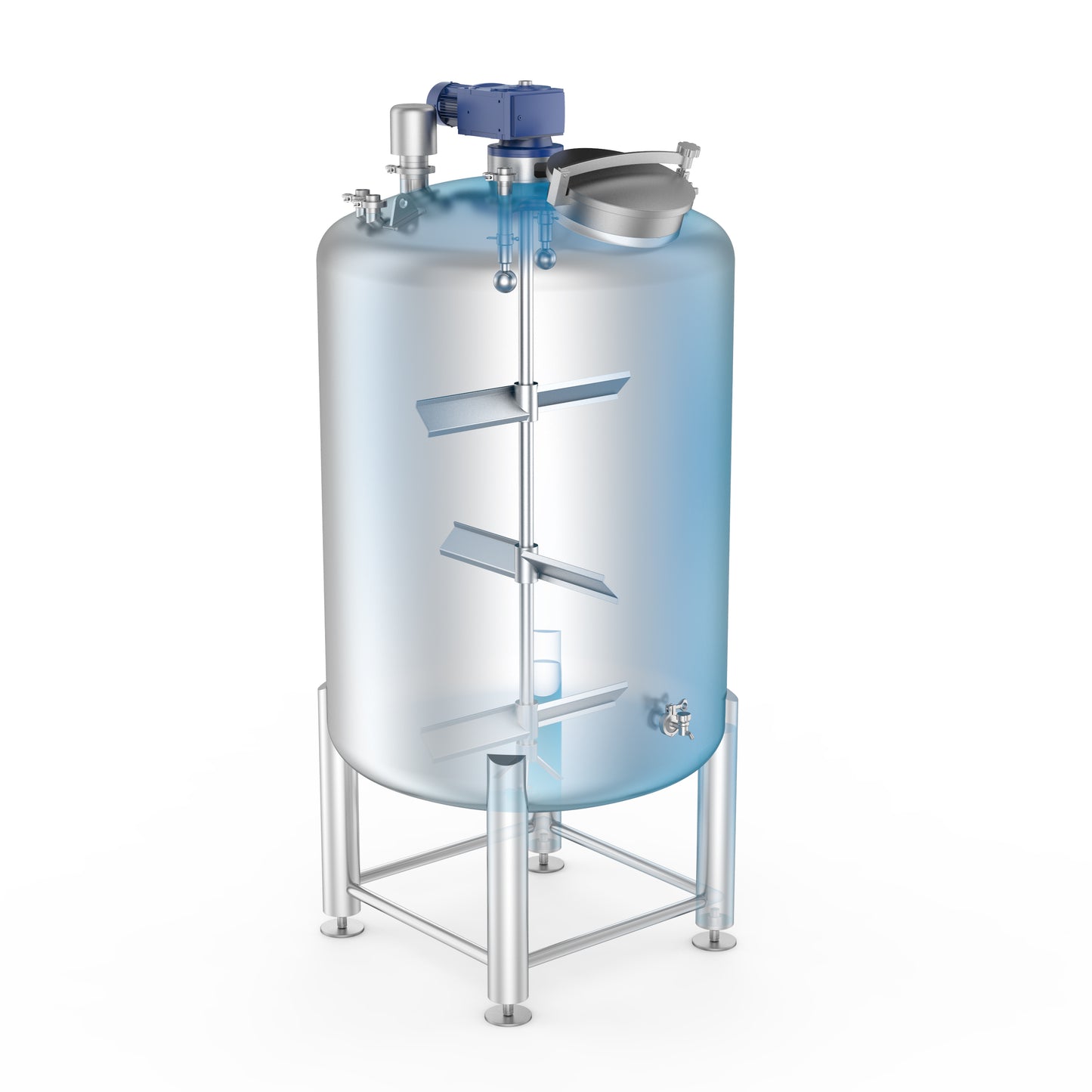
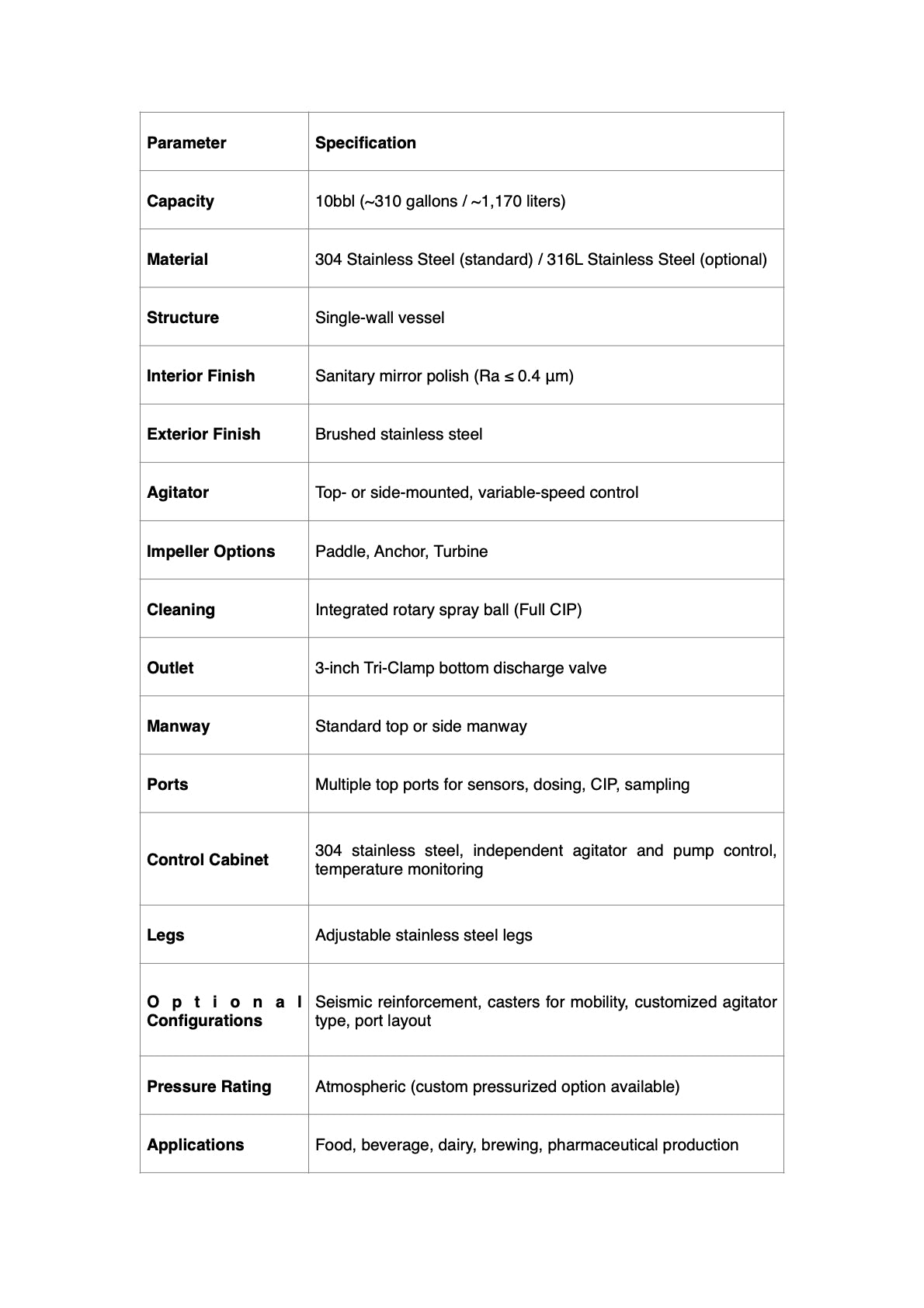
  • Sanitary Stainless Construction – Crafted from 304 or 316L stainless steel, featuring a polished sanitary interior (Ra ≤ 0.4 μm) and brushed exterior finish for long-term hygiene and durability.
  • High-Efficiency Mixing Performance – Equipped with top or side-mounted agitators and variable-speed control. Multiple impeller options — paddle, anchor, or turbine — ensure uniform blending of liquids, powders, and slurries.
  • Complete CIP Cleaning System – A built-in rotary spray ball provides full 360° cleaning coverage with no dead zones. Fully compatible with automated CIP (Clean-in-Place) systems.
  • Smooth and Sanitary Discharge – A 3-inch Tri-Clamp bottom outlet allows for fast, hygienic draining and simple transfer line integration.
  • Versatile Connection Ports – Multiple top-mounted sanitary ports support sensors, dosing lines, ingredient additions, and include a sampling valve and manway for easy access.
  • Smart Control Panel – A 304 stainless control cabinet operates the agitator and transfer pump independently, featuring an integrated temperature probe for precise process control.
  • Customizable Design Options – Available with adjustable legs, seismic reinforcement, or mobile casters. Agitator type, impeller style, and port layout can all be customized to meet specific production needs.
View full details

304 / 316L Stainless Steel Mixing Tank by Redwood is designed for sanitary cleaning workflows in brewery, beverage, and stainless process environments. It gives production teams a practical way to improve consistency, support sanitary operation, and build a more reliable day-to-day workflow.

This system is suited for facilities that want a more repeatable sanitation workflow and less manual handling during cleaning. It is especially useful when production teams need dependable cleaning support across tanks, kegs, hoses, and process equipment.

Key Benefits:

• Mobile cleaning support for tanks, hoses, and process equipment

• Stainless sanitary construction for beverage production environments

• Helps improve cleaning consistency and operator workflow

• Practical option for breweries and beverage facilities with multiple vessels

• Supports better sanitation routines between production runs

Q1: What is a top-entry mixing tank used for?

A top-entry mixing tank is used to blend liquids, dissolve soluble ingredients and maintain product uniformity. Typical applications include beverages, syrups, dairy mixtures and other liquid formulations. The agitator is selected to suit the product and processing requirements.

Q2: How is it different from a high shear mixing tank?

A top-entry mixing tank primarily provides bulk circulation and blending. A high shear mixing tank uses a rotor–stator workhead for more intensive powder dispersion, deagglomeration and emulsification. The appropriate system depends on your ingredients and target product characteristics.

Q3: Can the tank size and agitator be customized?

Yes. Tank capacity, dimensions, agitator type and motor power can be tailored to your batch size, product viscosity and installation space. Connections and accessories can also be configured for your process.

Q4: Can the tank be equipped for heating or cooling?

A jacketed configuration can be specified for heating or cooling. Jacket design, heating or cooling medium, operating conditions and controls are selected according to your process requirements.

Q5: Can it mix thick or viscous products?

Suitability depends on the product’s viscosity at the processing temperature. Thicker products may require an anchor agitator, wall scrapers or another mixing arrangement. Please share your product details so we can recommend an appropriate configuration.

Q6: What information is needed for a quotation?

Please provide your product type, required working volume, viscosity, processing temperature and mixing objective. Include any heating or cooling requirements, site electrical supply and installation space limitations.